Workplace noise can cause permanent hearing damage gradually, often without obvious warning signs in the early stages. For workers exposed to machinery, power tools, construction equipment or other hazardous noise, understanding the risks of industrial deafness can help identify hearing loss earlier and clarify what to do next.
For workers in Sydney and across NSW, early hearing assessment can also be relevant when investigating whether hearing loss is work-related and whether a workplace hearing loss compensation claim may apply.
What Is Industrial Deafness?
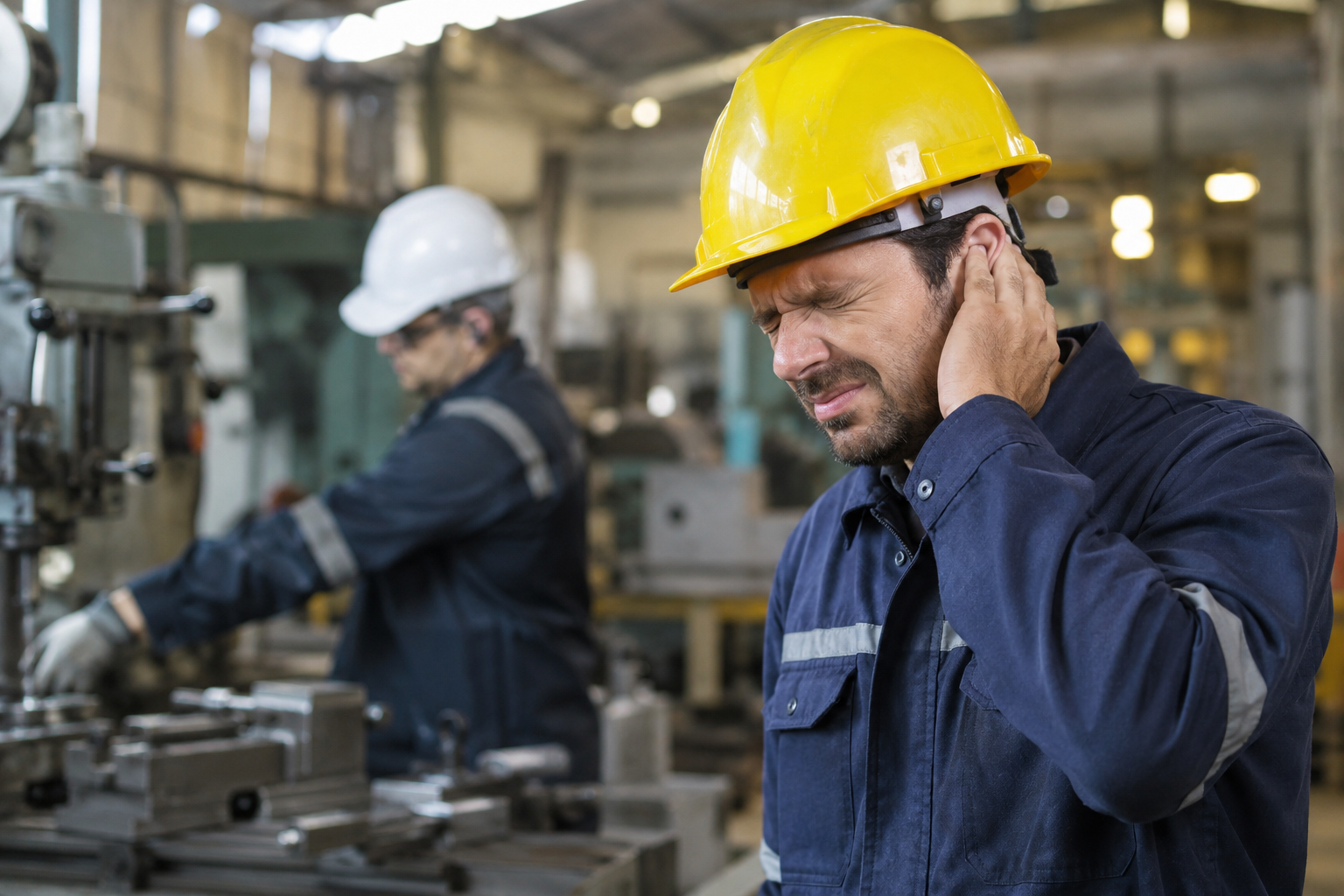
Industrial deafness generally refers to hearing impairment caused or contributed to by workplace exposure to hazardous noise. It is commonly associated with prolonged occupational noise exposure, although a single extremely loud incident can also cause hearing damage.
Noise-induced hearing loss occurs when excessive sound damages the delicate sensory cells in the inner ear. Unlike temporary hearing changes caused by short-term exposure, permanent damage to these structures cannot simply be reversed.
The term can cover hearing loss associated with occupations such as:
- Construction and building work
- Manufacturing and factory work
- Machinery operation
- Engineering and metalwork
- Automotive work
- Transport and heavy vehicle operations
- Agriculture
- Other occupations involving regular hazardous noise
How Does Workplace Noise Damage Hearing?
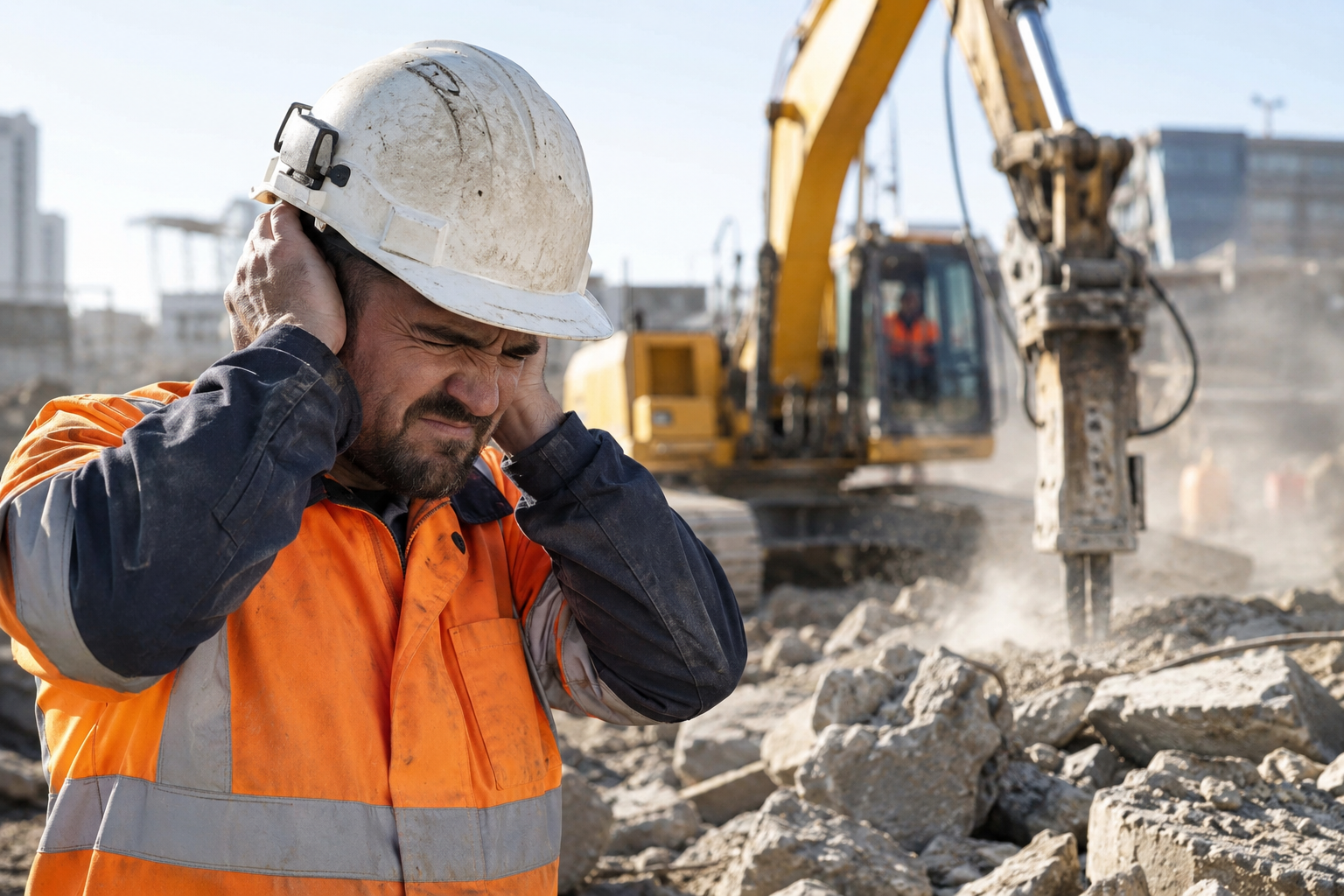
The risk depends on both how loud the sound is and how long you are exposed to it.
For example, a worker may spend several hours each day close to loud machinery. Even if the noise does not appear painful, repeated exposure can gradually damage the sensory cells responsible for hearing.
Very loud, sudden sounds present a different risk. Explosions, certain industrial processes and other extreme noise events can cause acoustic trauma and potentially permanent hearing damage.
A useful practical warning sign is having to raise your voice to communicate with someone about one metre away. This can indicate that the surrounding noise is at a potentially hazardous level.
Common Signs of Noise-Induced Hearing Loss
Industrial hearing loss often develops gradually, so workers may adapt to the change before recognising that their hearing has deteriorated.
Possible signs include:
- Difficulty understanding speech, particularly in noisy environments
- Frequently asking people to repeat themselves
- Increasing television or radio volume
- Difficulty hearing conversations over the telephone
- Missing parts of conversations at work
- A sensation that people are mumbling
- Ringing or other sounds in the ears, known as tinnitus
- Difficulty identifying where sounds are coming from
The absence of pain does not mean that hearing is unaffected. Noise-related hearing damage can progress without obvious symptoms.
Why a Hearing Test for Industrial Deafness Matters
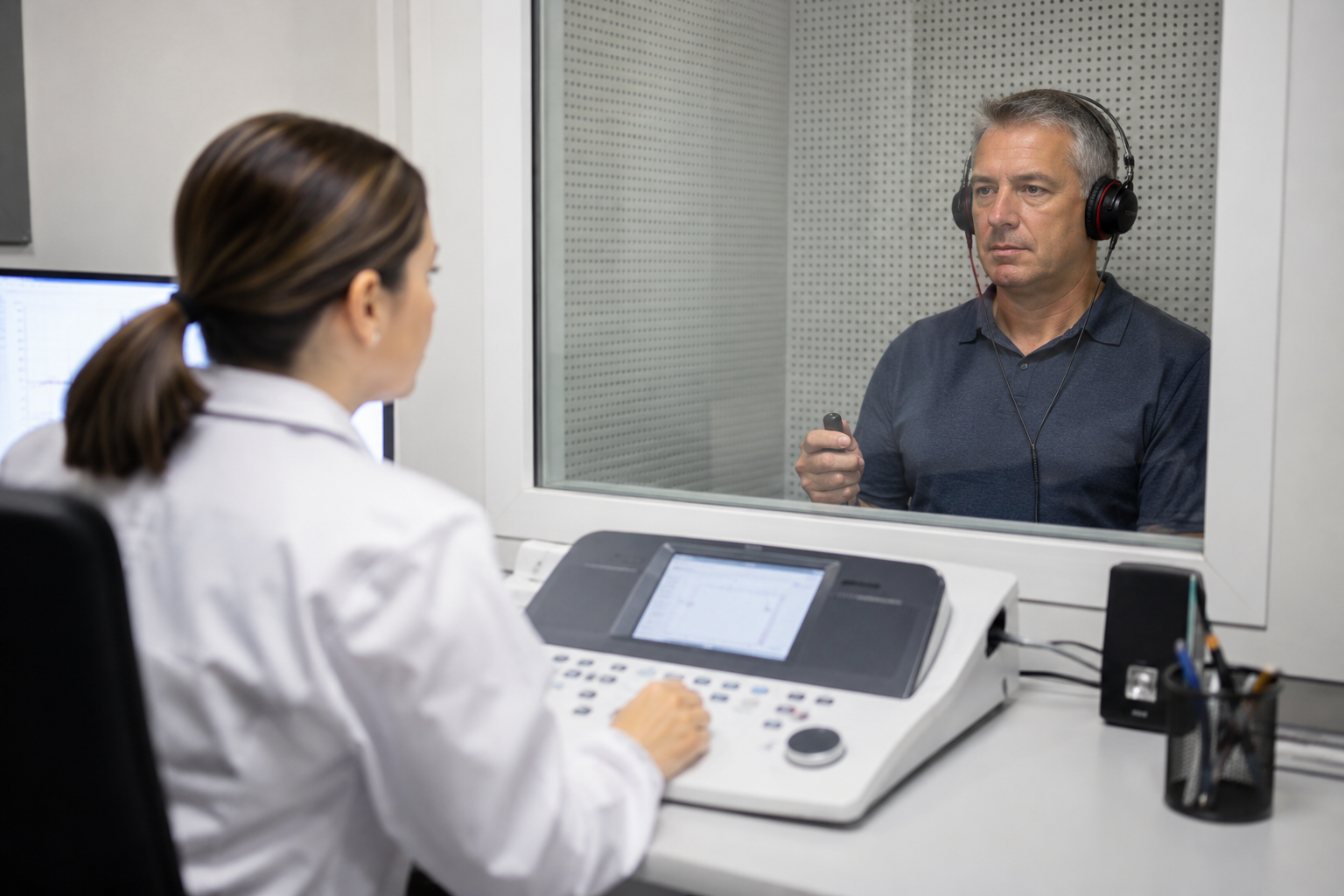
A professional industrial deafness hearing test can establish whether hearing loss is present and provide objective information about its severity and characteristics.
Audiometric testing typically measures hearing thresholds across different frequencies. Depending on the circumstances, additional assessments may help determine the type of hearing loss and whether there may be an issue involving the outer, middle or inner ear.
For workers concerned about hearing loss caused by workplace noise, testing can provide an important starting point. It can also create a record that may be useful when monitoring hearing over time.
In NSW workers compensation matters, the assessment process can involve more than a standard hearing screening. SIRA states that a hearing needs assessment can include clinical history, hearing assessment, communication goals and consideration of whether a hearing aid is appropriate.
For a permanent impairment assessment relating to work-related hearing loss, NSW requirements can involve an ENT specialist and an audiogram, with work-related and non-work-related factors considered when assessing impairment.
Can Industrial Deafness Lead to Compensation?
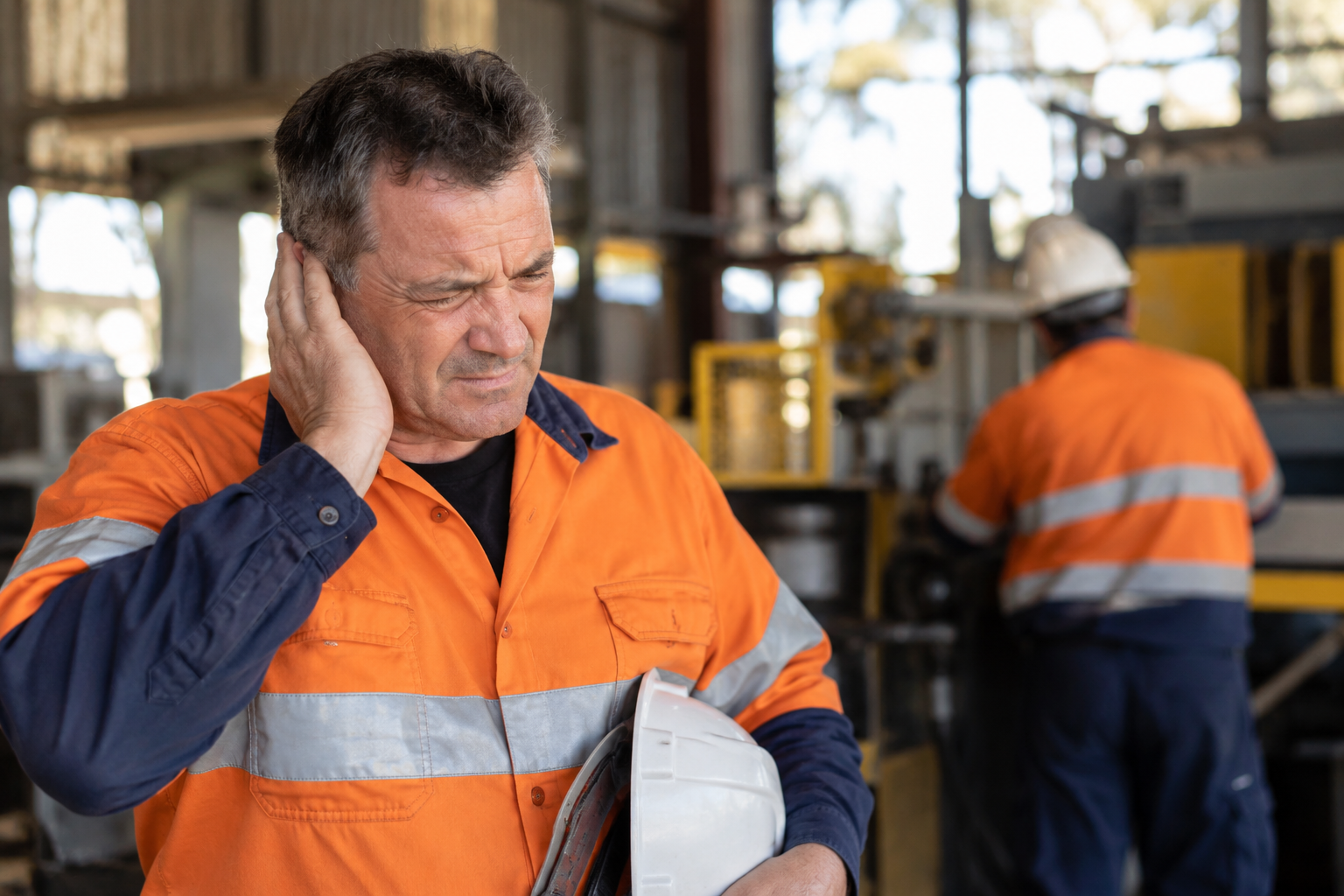
Potentially, yes. However, industrial deafness compensation is not automatically payable simply because someone has hearing loss and has worked in a noisy environment.
In NSW, a work-related hearing loss claim generally needs evidence connecting the hearing impairment with employment. SIRA explains that a worker assessed as having hearing loss due to employment may be able to claim lump sum compensation, subject to the applicable requirements.
The process can involve:
- Identifying the hearing problem: A hearing assessment establishes whether hearing loss exists.
- Establishing work-related exposure: Employment history and exposure to workplace noise may be relevant.
- Obtaining appropriate medical assessment: NSW workers compensation rules can require specialist assessment for permanent impairment.
- Lodging the relevant claim: The claim is made through the applicable workers compensation process.
- Assessing impairment: The level of work-related hearing impairment is assessed under the applicable NSW guidelines.
The NSW legislation also contains specific provisions for hearing loss caused by a gradual process, recognising the distinctive nature of occupational hearing impairment.
What Is the Industrial Deafness Claim Time Limit in NSW?
This is an area where workers should avoid relying on a simple internet rule.
Generally, NSW workers compensation claims have time limits, and the Independent Review Office states that a claim should ordinarily be made within six months of the injury or illness. There are circumstances in which this period can be extended.
Hearing loss can be different because occupational deafness may develop gradually over many years. NSW provisions specifically address gradual hearing loss, and the deemed date of injury can depend on circumstances including when notice is given and whether the worker remains in noisy employment.
The Independent Review Office has also noted that, for industrial deafness claims, the relevant time-limit issues can depend on when the worker became aware of both the injury and its cause.
For that reason, anyone considering an industrial deafness claim should obtain current NSW-specific advice rather than assuming that an old exposure automatically prevents a claim.
How Much Compensation for Industrial Deafness?
There is no single standard industrial deafness compensation amount that applies to every worker.
Compensation can depend on factors including the degree of work-related hearing impairment, the applicable workers compensation legislation, the type of benefit being claimed and the circumstances of the claim.
NSW uses specific assessment guidelines for hearing impairment. The assessment considers binaural hearing impairment and can take relevant non-work-related hearing loss into account.
This means an online figure should not be treated as a guaranteed payout. A proper assessment is necessary before determining what compensation may potentially be available.
It is also useful to distinguish compensation from hearing treatment. SIRA states that eligible workers may be able to claim reasonably necessary hearing aids and certain hearing-related services where the hearing loss resulted from employment.
How to Protect Your Hearing at Work
Prevention remains more effective than trying to manage permanent hearing damage later.
Employers should identify hazardous noise, assess exposure and implement appropriate controls. Depending on the workplace, controls can include quieter equipment, isolation, barriers, engineering modifications, reduced exposure time and hearing protection.
Workers can also take practical steps by:
- Wearing hearing protection correctly and consistently where required
- Following workplace noise-control procedures
- Reporting damaged or unusually noisy equipment
- Taking part in required audiometric testing
- Having hearing assessed if changes become noticeable
- Keeping records of relevant occupational hearing assessments where appropriate
For workers who frequently need personal hearing protection because of workplace noise, the model WHS regulations provide for audiometric testing, including testing within three months of starting work and at least every two years. Specific legal requirements depend on the applicable jurisdiction and circumstances.
Industrial Deafness Claims: What Should You Do Next?
If you have spent years working around loud machinery, tools or industrial equipment and are noticing changes in your hearing, do not wait until communication becomes difficult.
Start with an appropriate hearing assessment. It can establish whether hearing loss is present and provide useful evidence for determining the next step. If you are considering industrial deafness workers compensation, remember that the medical assessment and legal claim are related but separate parts of the process. For a broader overview of modern hearing care, explore this guide to expert audiology services.
Hearing Aids Professionals provides comprehensive hearing assessments, mobile audiometry, speech recognition testing and services relating to industrial deafness claims across its Sydney-area locations.
A timely hearing assessment can help you understand what has happened to your hearing, whether workplace noise may have contributed and what options should be considered next.
Frequently Asked Questions
Industrial deafness is hearing impairment caused or contributed to by workplace exposure to hazardous noise. It is commonly associated with prolonged occupational noise exposure and may result in permanent hearing loss.
You may be able to claim compensation if your hearing loss is work-related and you satisfy the requirements of the applicable workers compensation scheme. In NSW, work-related hearing impairment can potentially qualify for lump sum compensation and other benefits, depending on the circumstances.
A hearing assessment is an important part of establishing the nature and extent of hearing loss. NSW workers compensation claims involving permanent hearing impairment can require specialist medical assessment and audiological evidence.
There are statutory time limits for workers compensation claims, but gradual occupational hearing loss has specific considerations. The applicable timeframe can depend on when the injury is deemed to have occurred and when the worker became aware of the injury and its cause.
There is no universal compensation amount. The potential benefit depends on the applicable NSW rules and the assessed level of work-related hearing impairment. A proper medical and impairment assessment is needed before an amount can be determined.