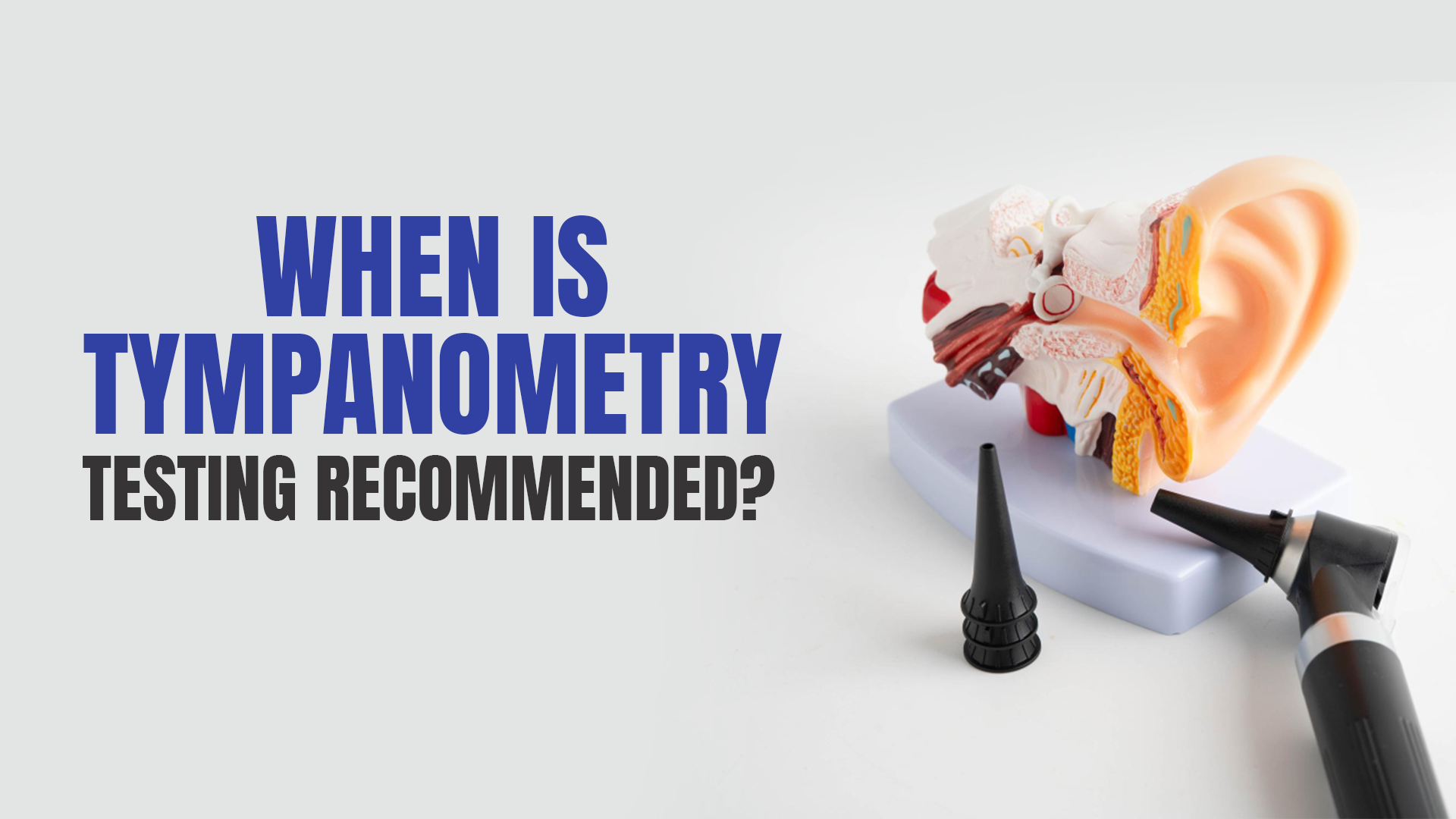
A Tympanometry Test is recommended when a clinician needs more information about how the middle ear and eardrum are functioning. Unlike a standard hearing test, which measures how well you hear sounds, tympanometry assesses the movement of the eardrum and changes in middle-ear pressure.
This makes tympanometry particularly useful when hearing difficulties may be related to fluid behind the eardrum, middle-ear pressure problems, eardrum abnormalities or other conductive hearing problems. It is often performed alongside otoscopy and audiometry rather than used as a standalone diagnostic test.
What does a Tympanometry Test measure?

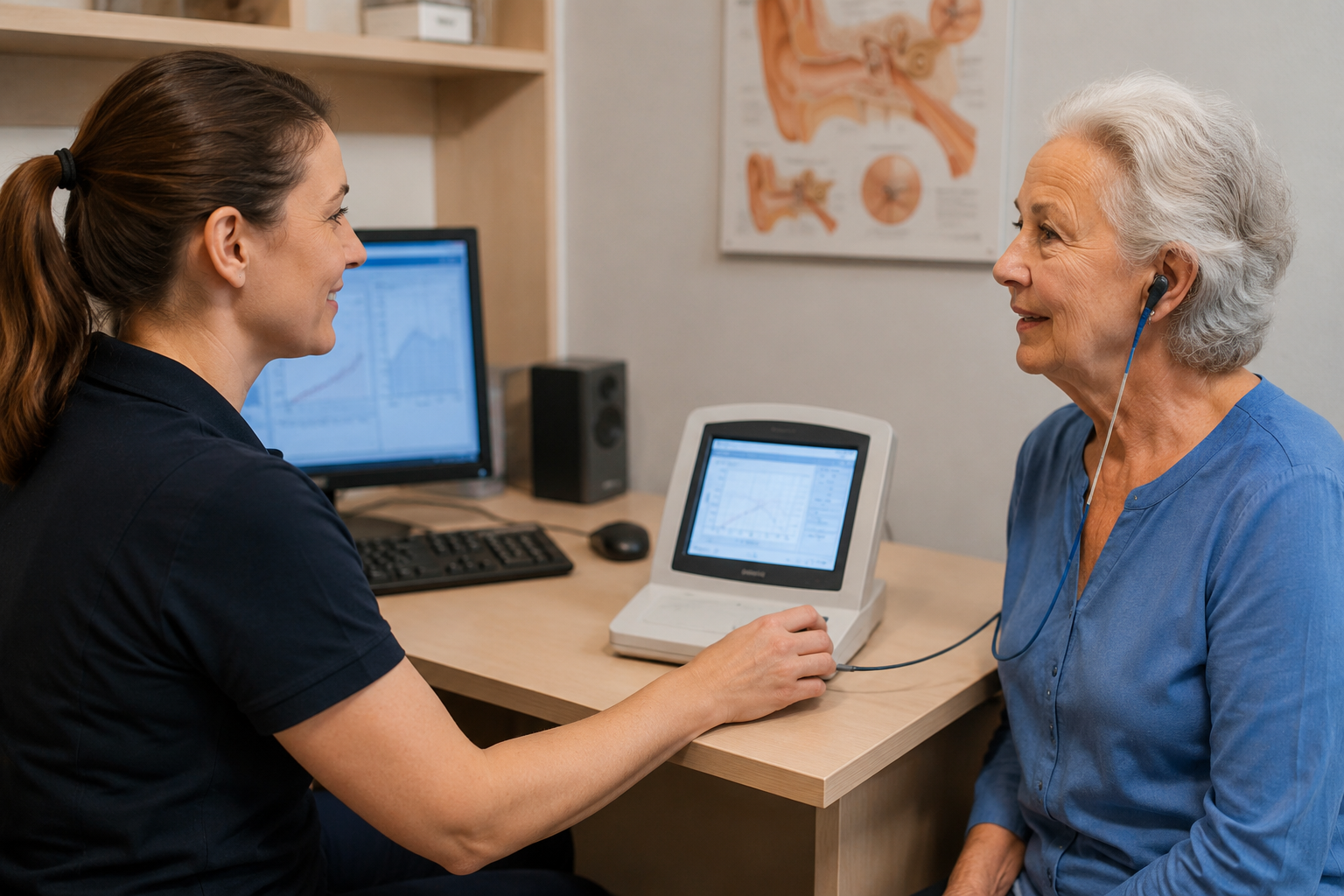
A tympanometry test measures how the eardrum and middle-ear system respond to controlled changes in air pressure. A small probe is placed into the ear canal to create an airtight seal, introduce pressure changes and measure the resulting movement of the eardrum.
The test can provide information about:
- Eardrum mobility
- Middle-ear pressure
- The mechanical function of the middle-ear system
- Possible fluid in the middle ear
- Some conditions affecting the eardrum or middle ear
The resulting graph is called a tympanogram. However, an abnormal tympanogram does not automatically identify one specific disease. Different middle-ear conditions can produce similar results, so the findings need to be interpreted alongside the person’s symptoms, otoscopic examination and hearing assessment.
When is a Tympanometry Test recommended?

A Tympanometry Test may be recommended when there is a reason to investigate possible middle-ear dysfunction. Common situations include the following.
1. When hearing loss may involve the middle ear
If someone reports muffled hearing or a hearing assessment suggests a conductive component, tympanometry can help determine whether the middle ear may be contributing.
A hearing assessment and tympanometry provide different information. Audiometry measures hearing sensitivity, while tympanometry provides information about middle-ear mechanics. Using the tests together can give a more complete picture of the possible cause of hearing difficulty.
2. When middle-ear fluid is suspected
Tympanometry is commonly used when otitis media with effusion, sometimes called glue ear, is suspected.
Fluid in the middle ear can restrict normal eardrum movement. Tympanometry can provide objective information that supports the clinical assessment.
In children, clinical guidelines recommend tympanometry when otitis media with effusion is suspected and the diagnosis remains uncertain after, or despite an attempt at, pneumatic otoscopy.
3. When there are recurrent ear infections
People who experience repeated ear infections may require assessment of their middle-ear function, particularly when hearing difficulties are also present.
Tympanometry may form part of that broader assessment when middle-ear function needs to be evaluated.
4. When eardrum movement or function needs to be assessed
Changes affecting the eardrum can alter its normal movement. Tympanometry can help identify abnormal middle-ear mechanics and provide information that may not be apparent from a hearing test alone.
For example, tympanometry can contribute to assessment when there is concern about abnormal eardrum mobility or certain middle-ear disorders. It may also be useful when examining the ear is difficult or when visualisation of the eardrum is limited.
5. When Eustachian tube or middle-ear pressure problems are suspected
The Eustachian tube helps regulate pressure in the middle ear. Problems with pressure regulation can affect how the eardrum and middle-ear system function.
When a person’s symptoms or clinical assessment suggest a pressure-related middle-ear problem, tympanometry can provide objective measurements that help the clinician assess middle-ear status.
The result should still be interpreted in context rather than treated as a diagnosis by itself.
6. Before or alongside a hearing assessment
A tympanometry test may be included as part of a broader hearing assessment when there is a clinical reason to evaluate the outer and middle ear.
It is not a replacement for a hearing test. Pure-tone audiometry, for example, determines the quietest sounds a person can hear at different frequencies, while tympanometry examines middle-ear function.
Is tympanometry recommended for children?
Yes, when there is an appropriate clinical reason.
Tympanometry is particularly useful when middle-ear fluid is suspected in children because glue ear can cause temporary conductive hearing loss. If a child has hearing difficulties, recurrent ear infections or concerns about speech, language or learning, a clinician may recommend hearing assessment and further investigation.
Importantly, tympanometry should not be viewed as a universal screening test for every healthy, symptom-free child. Its use should be based on the child’s circumstances and clinical assessment.
What do tympanometry test results mean?
A tympanogram shows how the ear responds to pressure changes, but interpreting the result requires more than simply looking at the shape of the graph.
Clinicians consider factors such as:
- The shape and position of the tympanogram
- Middle-ear pressure
- Eardrum mobility or compliance
- Ear-canal volume
- Otoscopic findings
- Hearing-test results
- The person’s symptoms and medical history
A flat tympanogram, for example, can occur with several different conditions. The ear-canal volume and other clinical findings help determine what the result may indicate. This is why professional interpretation is essential.
A tympanometry result should therefore not be interpreted in isolation or used to assume a specific diagnosis.
Does a Tympanometry Test diagnose hearing loss?
Not by itself.
Tympanometry assesses the mechanical function of the middle ear. It does not measure hearing sensitivity in the same way as pure-tone audiometry.
A person can have an abnormal tympanogram without having permanent hearing loss, while someone with hearing loss may have a normal tympanogram if the problem originates elsewhere in the auditory system.
For this reason, tympanometry is most useful when combined with the appropriate clinical examination and hearing assessment.
How much does a Tympanometry Test cost in Australia?
The tympanometry test price or tympanometry test cost can vary depending on the provider, the type of assessment being performed and whether tympanometry forms part of a broader hearing assessment.
Rather than assuming a standard national price, ask the audiology clinic what is included in the appointment and whether additional hearing or diagnostic testing is recommended.
When should you consider tympanometry?
A clinician may consider tympanometry when there is:
- Unexplained or suspected conductive hearing loss
- Suspected middle-ear fluid or glue ear
- Recurrent ear infections
- Concerns about eardrum movement
- Possible middle-ear pressure dysfunction
- An abnormal finding during an ear examination
- A need for additional information during a hearing assessment
The appropriate test depends on the person’s symptoms, age, medical history and initial examination.
Conclusion
A Tympanometry Test is most useful when a clinician needs objective information about the eardrum and middle ear. It can support assessment of conditions such as middle-ear fluid, pressure abnormalities and other problems that may contribute to conductive hearing difficulties, but it should be interpreted alongside the person’s symptoms, ear examination and hearing-test results.
If you are experiencing hearing difficulties, recurrent ear problems or concerns about how your ears are functioning, Hearing Aids Professionals can help determine which hearing assessments are appropriate for your situation. For a broader overview, explore our guide to hearing tests in Australia to understand the different tests, processes and benefits. A professional assessment can establish whether tympanometry, audiometry or further medical investigation is warranted.
Frequently Asked Questions
A probe creates a seal in the ear canal and changes the air pressure around the eardrum while measuring its response. The test produces a graph called a tympanogram, which helps assess middle-ear function.
Tympanometry is generally considered a safe hearing assessment procedure. You may notice a sensation of pressure in the ear while the equipment changes the air pressure, but the test itself is brief.
Tympanometry can provide information about middle-ear function and may help identify middle-ear effusion, but it does not independently diagnose every type of ear infection. Diagnosis should consider symptoms and examination findings, including otoscopy.
No. A hearing test such as pure-tone audiometry measures how well you hear different sounds. Tympanometry assesses eardrum movement and middle-ear function. The two tests can complement each other.
It may be recommended as part of a hearing assessment when there is a reason to investigate middle-ear function, such as suspected fluid, pressure problems, recurrent ear infections or a possible conductive component to hearing loss. The exact assessment pathway depends on the individual.